Click the Links Below to Learn More
Scrubber Sludge Dewatering Systems
Lime Slaking System Design
Slurry Transport System Design
SNCR System Design
Stockpile Inventory
Underground Mine Injection Design

Click HERE for a printable version of these documents


Miltech has participated with Coal Fired Power Plants in the assessment, redesign, and upgrading of fly ash and scrubber sludge recovery and disposal systems.

At one power plant where about 900,000 tons per year of coal is burned, Miltech assessed the amount of fly ash and scrubber sludge being generated, the cost involved and worked with the client to modify the sludge/fly ash recovery system involved.

This sludge/fly ash system included:

  • Thickeners to concentrate the fly ash/sludge
  • Pumping systems for thickener water and sludge
  • Treatment of sludge prior to filtering and centrifuging
  • Filtering and centrifuging of the thickened fly ash/sludge
  • Conveying of the filtered fly ash/sludge to loadout.

In this system Miltech designed a centrifuge system, including the structure that housed the system. Miltech also oversaw the installation of the centrifuge recovery system.

Back to Top


The Miltech engineers and technicians are experienced in the design and maintenance as well as the operational features of lime slaker systems for both acid mine water treatment and pollution control in coal fired power plants.

Slaker Systems - Acid Mine Drainage Treatment

In the treatment of acid mine drainage Miltech has been involved with systems that treat up to 15 million gallons of acid mine water per day. The most complex of these systems that have utilized Miltech services includes:

  • Pumping of the acid mine water from the deep mines to the treatment plant
  • Slaking of the lime and control of the feeding of lime slurry to the acid mine water
  • Thickening of the sludge
  • Control of the quality of the treated water for discharge into the local steam
  • Pumping and discharge of the thickened sludge into the mine

A key system within the overall AMD treatment process is the lime slaker system.

For effective operation, the lime (calcium oxide) must be chemically converted to hydrated lime (calcium hydroxide) before it is used to treat the acid mine water. This process is called "slaking".

The lime slaking system encompasses all of the equipment with associated controls starting from the lime feeder silo through the lime slaker slurry and lime grits removal.

Miltech offers the following services related to design and maintenance of lime slaker systems in AMD processes:

  • Sizing of new slakers
  • Modification of existing slakers
  • Controls for slaker operation
  • Design of control systems lime feed to slakers
  • Design of control systems for water quality assurance
  • Control and discharge of lime grits
  • Control of sludge removal
  • Operating instructions for slaker systems

For more information related to overall AMD treatment and sludge disposal see:

Slaker Systems - Pollution Control in Coal Fired Power Plants

Over the past several years Miltech has utilized its extensive experience with slaker systems in acid mine water treatment plants for the design, maintenance and modification of lime slaker systems in the pollution control processes of coal fired power plants.

In these pollution control processes the slaked lime removes the SO2 from the gases by entering the scrubber with the scrubber water.

At one power plant Miltech designed and supervised the modifications of three slakers in a 5-slaker system. These modifications also included:

  • Upgrading key mechanical components of the slakers, the vibrating lime bins and the lime slurry handling system
  • Design and upgrading of the components of the control loops in the slaker/scrubber process.

System components included:

  • Lime feed vibrating bins
  • Lime feeders
  • Lime slakers
  • Grit removal compartment and conveyor
  • Lime slurry transfer tank
  • Lime slurry pumps
  • Lime slurry pump controls
  • pH control
  • Process control loops

At this power plant operation Miltech was also involved in the re-design and modification of the scrubber sludge recovery and disposal system.

For more information see Scrubber Sludge Recovery and Disposal.

Back to Top


Miltech Energy Services, Inc. designs small and large scale pumping systems, including slurry pumping systems. A "slurry" is a mixture of solids in water. Slurries include the sludge byproduct of water treatment systems in water, scrubber sludge in water, fly ash in water, and other solids mixed with water.

Design calculations for the transportation of a slurry mixture from one location to another are similar to other pumping calculations, with additional considerations that must be included. The specific gravity of the slurry must be included in the calculation. A minimum slurry transportation velocity must normally be maintained to prevent the solid particles in the slurry from falling out of suspension. The abrasion characteristics of the slurry must be considered when evaluating pump wear components, and the abrasion resistance of the pipeline. Sometimes the temperature of the slurry affects the criteria for selecting pumps and piping, particularly if the slurry is pumped at an elevated temperature, as is sometimes the case with fly ash slurries.

Miltech prepared slurry pumping evaluations, designs, and specifications for a power plant that planned to pump a fly ash slurry to a bore hole for injection into and abandoned underground coal mine. The total pumping distance was approximately 11,000' through a combination of 12" steel pipe and 16" thick-wall HDPE pipe. A booster pump was included in the system along the pipeline to prevent the pressure in the pipe from exceeding desired levels. The booster pump also allowed for the possibility of extending the pipeline to a more distant bore hole location in the future. The design had to take into account the critical settling velocity of the fly ash, the abrasive characteristics of the fly ash, the elevated temperature of the fly ash slurry, expansion and contraction issues, etc.

Miltech provides slurry transportation services including the following:

  • Analysis of the system requirements
  • Piping, pumps, controls, and installation specifications
  • Installation designs
  • Permit preparations and follow-up
  • Preparation of bid documents
  • Installation and startup assistance

For additional related information see:

Back to Top


Miltech Engineers are experienced in the design and installation of SNCR (selective non-catalytic reduction) systems for the reduction of NOx (nitrogen oxides) in flue gas emissions. At one CFB waste coal burning power plant, Miltech designed an aqua ammonia SNCR system to reduce NOx emissions from 0.35 lb/mm BTU (pounds per million BTU) to 0.13 lb/mm BTU. Designs included:

  • Determining aqua ammonia feed rate required to achieve the desired NOx reduction
  • Selecting the pumps and piping required to transmit at the proper pressure and flow rate, aqua ammonia from an on-site storage tank to the injection sprays in the cyclones located upstream of the stack
  • Sizing and providing specifications for the on-site aqua ammonia storage tank
  • Sizing and designing concrete containments for the aqua ammonia storage tank, and an aqua ammonia truck unloading station
  • Designing a pump skid for fabrication to support three aqua ammonia pumps (two pumps plus one spare) for a two-train system, with valves and controls to allow for the interchangeable use of the pumps
  • Designing four flow meter panels for fabrication. The designs included splitting the two aqua ammonia streams into 12 streams leading to lances and spray nozzles, and for air injection into the aqua ammonia streams.
  • Selecting the proper spray nozzles for injecting aqua ammonia and air into the cyclones.

In addition to designing and selecting the equipment for the aqua ammonia injection system, Miltech also assisted plant engineers and operators with selecting the location for the aqua ammonia storage tank, truck unloading station, pump skid and controls, and the flow meter panels. Once the aqua ammonia truck unloading and storage tank site was selected, Miltech prepared specifications for the demolition and removal of unused facilities at the selected location. Miltech then surveyed the site, prepared site grading plans, and prepared detailed designs for the installation of the concrete foundations and containments. Pipeline routing plans from the ammonia storage tank, to the pump skid, to the flow meter panels in the plant, and to the 12 ammonia injection lances were also prepared. A complete list of materials required for the project was provided to the client.

For the particular project, Miltech provided on-site supervision and inspection during site grading, and during installation of the concrete foundations and containments. Miltech has the capability and expertise necessary to follow through on all projects from the design phase, to the construction and installation phase, and through the startup and initial operation phases, as required by the client.

For additional related information see:

Back to Top


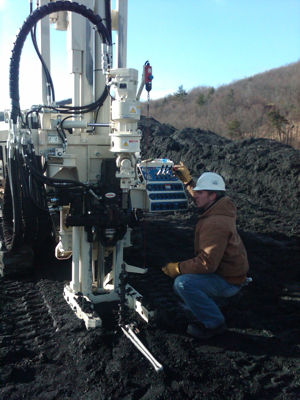
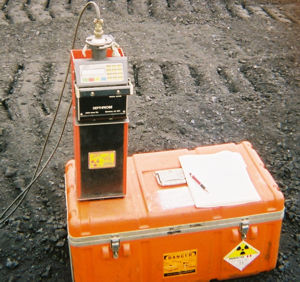
Miltech's fuel stockpiling inventory services offer our clients the ability to reconcile inventories. The services include determining stockpile volume by aerial and/or ground survey methods, density determination by drilling and nuclear backscatter methods as well as stockpile sampling and analyses.

Miltech's volumetrics and density testing are done in accordance with ASTM procedures in order to ensure the maximum achievable accuracy.

Back to Top


Underground injection systems usually pertain to the injection of waste slurries, such as water treatment sludge or power plant fly ash, to abandoned underground mines, or to abandoned areas of active underground mines. It is possible to inject other waste slurries to underground mines as well. Miltech Energy Services, Inc. has experience and expertise in the design and the operation of mine injection systems.

Slurry is normally injected from the surface to underground mines via bore holes. Knowledge of underground mining and the ability to read mine maps are prerequisite to selecting the injection location. For old abandoned mines, relating underground locations to points on the surface can be tricky, if surface control points related to the underground mine coordinate system no longer exist. For such situations GPS technology sometimes proves to be useful. Surface ownership, environmental considerations, water supplies, and compliance with regulations all play roles in selecting a bore hole location, and in routing the pipeline to it.

Miltech selected injection bore hole locations to an abandoned underground for a coal burning power plant desiring to inject fly ash into the mine. Miltech also designed the pumping and piping system from the power plant to the bore hole. For another client Miltech operates mine water treatment plants, and injects the sludge from those treatment plants back to the same mines.

Miltech provides underground mine injection system design services including:

  • Researching mine maps for selecting potential injection locations
  • Relating the underground mine coordinate system to the surface system so that bore holes can be drilled in their proper locations
  • Designing bore hole installations and preparing drilling specifications
  • Design of pumping and piping systems
  • Preparing operation and control plans
  • Researching surface ownership, and preparing legal descriptions
  • Preparing specifications and bid documents
  • Permitting
  • Installation and startup assistance

For additional related information see:

Back to Top

Click HERE for a printable version of these documents